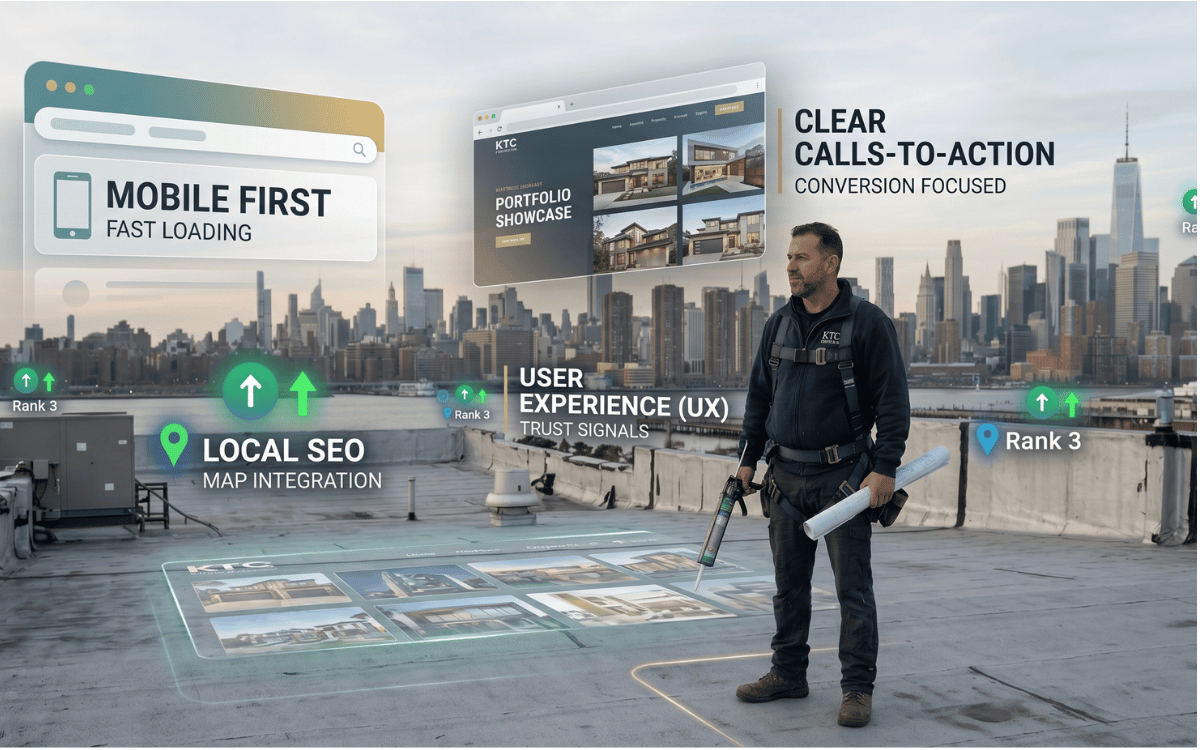
You pay for a lead, call back inside a minute, and the homeowner says three other contractors have already called. That's how shared leads work: the same request goes to several businesses, and the conversation starts with price. This guide covers where exclusive leads come from instead, starting with your own Google Maps listing, and how to tell when a lead platform still pays for itself.
It applies to every trade we work with: HVAC and plumbing, remodeling, epoxy and concrete coating, and roofing.
How shared lead platforms work
Lead marketplaces such as HomeAdvisor (part of Angi) and Thumbtack collect requests from homeowners and pass them to contractors who pay for leads or for being shown. Depending on the platform and the job, one request can go to more than one business, and you usually pay for the lead whether or not you win the job. Read each platform's current terms for how many pros receive a lead, what it costs in your area, and which leads you can get credited.
None of that makes the platforms bad. They can fill a calendar when you're new or slow. The catch is the cost per booked job, which is the number that matters.
Cost per lead vs cost per booked job
A cheap lead isn't cheap if you rarely win it. Divide what you pay per lead by how often you win, and you get what each booked job really costs you.
Example, with made-up numbers:
- Shared lead: $40 a lead, won 1 time in 15. Cost per booked job: $600, plus the time spent on 14 calls that went nowhere.
- Exclusive lead from your own website or Google profile: $150 a lead once you count what you spend to get it, won 1 time in 3. Cost per booked job: $450.
Your numbers will differ. Track cost per booked job by source for three months, and keep whatever comes out cheapest.
Where exclusive leads come from
1. Your Google Business Profile in the Map Pack
When a homeowner searches “water heater repair” or “roofer near me”, Google shows three businesses on a map before anything else. A call from there comes to you alone. Getting there is work on your profile, your reviews, your citations and your website, done steadily. Google ranks local results on relevance, distance and prominence, and you can't pay for a better local ranking (Google Business Profile Help). Our local SEO checklist walks through the profile side.
2. Your own website
A site with a page for each service and each town you work in shows up for the searches the directories are buying. When someone fills in your form, the lead is yours. The contractor website tips cover what those pages need.
3. Local Services Ads
Google's Local Services Ads show above the map with the Google Verified badge once you pass Google's checks, and you pay per lead rather than per click. The homeowner contacts your business directly.
4. Search ads to your own pages
Google Search ads on the searches that mean “I'm hiring today”, sent to a page built for that job, bring calls while your rankings build. Pay Google directly from your own account so the data stays yours.
5. Past customers and referrals
The cheapest job is the next one from someone who already trusts you. Ask for a review after every job, send seasonal reminders where your trade has them, and stay in touch with past customers.
Want to see which of these you're missing? Get my free audit. Within one business day you'll have a video comparing your Google profile with the three companies above you.
Exclusive leads only pay if you answer them
An exclusive lead that waits until tomorrow for a reply turns into a shared one, because the homeowner keeps searching. Reply to every form and missed call in under a minute, then follow up on day 1, 3 and 7 with anyone who goes quiet. That's the job of AI follow-up: it texts back a missed call, answers the form, asks the questions your office would ask and books the estimate into your calendar.
Should you stop using lead platforms?
Not on day one. Keep them while your own channels ramp up, track cost per booked job for each source, and cut the platforms that cost more than your own leads. Map Pack positions usually start to move in 60 to 90 days, longer in a busy county, so plan the switch over a season rather than a week.
How Royalso builds it
We run three things as one system: your Google Maps rankings, a website built to turn visits into calls, and AI follow-up that answers every lead in under 60 seconds. Ads run on Revenue Infrastructure and Multi-Market. We work with one contractor per trade per county, so the leads we help you earn don't go to a competitor we also serve.
Your domain, website, Google profile and ad accounts are in your name from day one, and what we build is yours once it's paid for. Your CRM and tracking numbers run in a GoHighLevel account we manage for you. Retainers start at $3,500 a month; the pricing page has the details.
See where your leads could come from
Send your business name, trade and county. Within one business day you'll get a video and a written list: your Google profile against the three companies above you, your site on a phone, what happens when someone calls after hours, and three fixes you can make yourself. No sales call; it comes by email.